Michael D. Moberly April 19, 2012
For management teams and senior leadership of SME’s, there may be few better uses of one’s time, particularly in this increasingly knowledge-based and intangible asset driven global economy than to ensure those intangible assets are being effectively managed, profitably exploited, and firmly embedded in the company’s operating processes and culture. Management teams unfamiliar with or reluctant to engage their intangibles will find this a prudent and much needed undertaking that can produce enterprise-wide benefits.
SME management teams who have already achieved operational familiarity with intangibles recognize those skill sets can produce numerous benefits, not the least of which is to serve as a starting point to elevate the probability a company will not merely experience mediocre success, but stand out in their market space and among competitors by…
- being innovative
- sustaining and enhancing their competitive advantages, and
- effectively and efficiently exploiting (producing, bundling, positioning) other intangible assets.
Respecting the economic fact that 80+% of most company’s, including SME’s, value, sources of revenue, and ‘building blocks’ for growth and profitability today evolve directly from intangible assets, there is, in my view, ample room-opportunity for managerial discretion and maneuverability to make such an initiative not merely worthy of their time, but lucrative and strategically beneficial to their company as a whole.
It’s still fair to say though, respectfully, and there is virtually no evidence to the contrary, that significant percentages of SME founders, owners, and management teams remain unfamiliar with, unconvinced about, and/or disinterested in…
- the intangible assets their company has developed, produced
- the contributory value of those assets to particular projects, business units, or the enterprise as a whole
- strategies to effectively exploit those assets to add value, depth, and sustainability to their company.
That said, it remains nothing short of an operational (business) imperative today that SME management teams seek any and all opportunities to develop a strong understanding and appreciation for intangible assets that include, among other things, methodologies – strategies to:
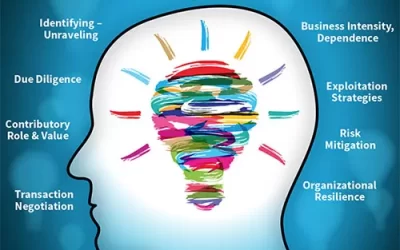
- identify and unravel intangibles’ origins, and assess their contributory value
- promote effective and efficient utilization of intangibles, i.e., leverage them internally, externally, and among stakeholders to influence additional and continued innovation, and
- exploit them to enhance – secure competitive advantages, reputation, image, and goodwill, and relationship capital, etc.
Unfortunately however, there remain numerous real and perceptual hurdles that, in essence, discourage, even deter some management teams from engaging their intangible assets and related opportunities to exploit those which are internally produced. This is largely because intangibles are still not consistently recognized or accounted for on a company’s balance sheet or financial statement other than being folded into goodwill which, in my view, falls short of providing SME management teams with a sufficiently strong rationale to aggressively and profitability engage them!
Too, key parties and institutions that presumably would have direct interest in using an SME’s financial reports (if they fully addressed intangibles), i.e., (a.) lenders for assessing asset-backed lending decisions, or (b.) SME management teams relative to fiduciary incentives to (better) manage, use, and exploit their intangibles, are discouraged from doing so, in part due to the (perceived) absence of objective and replicable methodologies to measure the performance and (contributory) value of intangible assets.
Still, the professional – personal incentive a business leader might enjoy from engaging – embarking on an intangible asset focused course of action is a worthy and useful starting point for making many (tactical as well as strategic) business decisions, and certainly for commencing any business transaction, because inevitably, intangible assets will in play in both circumstances.
SME management teams should therefore not overlook, especially in this globally charged knowledge-based economy, the reality that intangibles represent the dominant drivers – foundations to (company) value, revenue generation, growth, and profitability.
Unfortunately, as noted above, there remain, what some would describe as, real disincentives, which many SME management teams default, as a rationale for not engaging the intangible assets which they have fiduciary responsibilities for managing, overseeing, and stewarding.
Each blog post is researched and written by me with the genuine intent it serves as a useful and respectful medium to elevate awareness and appreciation for intangible assets throughout the global business community. Most of my posts focus on issues related to identifying, unraveling, and sustaining control, use, ownership, and monitoring asset value, materiality, and risk. As such, my blog posts are not intended to be quick bites of unsubstantiated commentary or information piggy-backed to other sources.
Comments regarding my blog posts are encouraged and respected. Should any reader elect to utilize all or a portion of my posts, attribution is expected and always appreciated. While visiting my blog readers are encouraged to browse other topics (posts) which may be relevant to their circumstance or business transaction. I always welcome your inquiry at 314-440-3593 or [email protected]